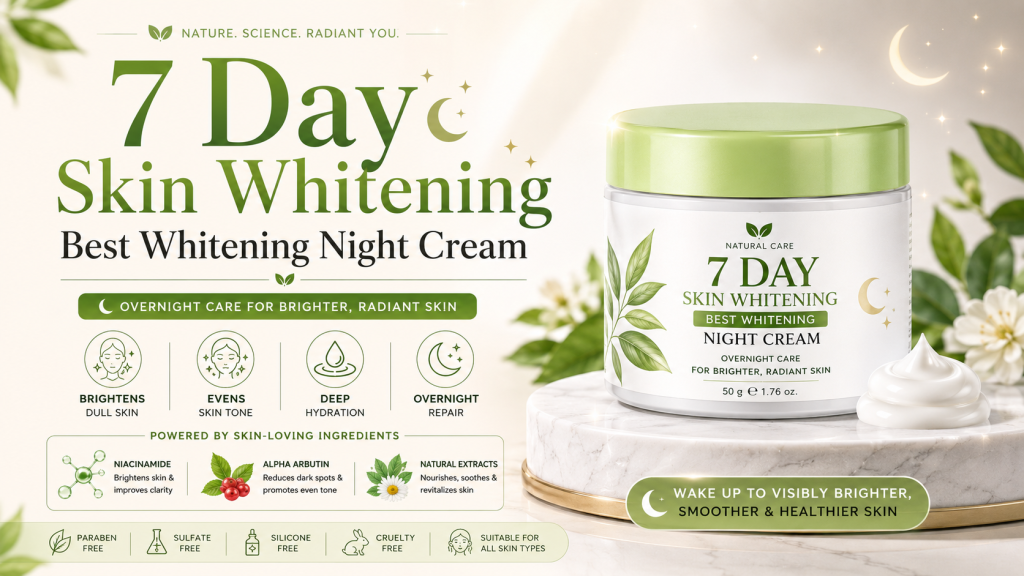
A 7 day skin whitening best whitening night cream is made to help dull and uneven skin look brighter while you sleep. It may support a fresh glow by adding moisture, smoothing rough skin, and helping fade the look of mild dark spots. Still, no cream can safely change your natural skin color in only 7 days. A good cream can make the skin look cleaner, softer, and more even, but deeper pigmentation needs more time.
For safe use, choose a night cream with clear ingredients and buy from a trusted seller. Avoid products with hidden mercury, strong steroids, or unknown bleaching agents. The FDA warns that some skin lightening products may contain mercury or hydroquinone and may not be approved for safety or effectiveness.
What Is a 7 Day Skin Whitening Night Cream?
A 7 day skin whitening night cream is a face cream used at night to improve the look of dullness, tanning, dark spots, and uneven tone. It usually works by moisturizing the skin and supporting gentle renewal. Some creams use ingredients like niacinamide, licorice extract, or mild exfoliating acids to help the skin look brighter over time. Similar product guides also describe night creams as products used for dullness, pigmentation, and overnight glow.
The “7 day” claim should be understood in a realistic way. In one week, the skin may look more fresh, hydrated, and slightly brighter. But strong whitening claims can be risky, especially if the product has no full ingredient list. For best results, use the cream at night and wear sunscreen during the day, because sun exposure can make dark spots look worse again.
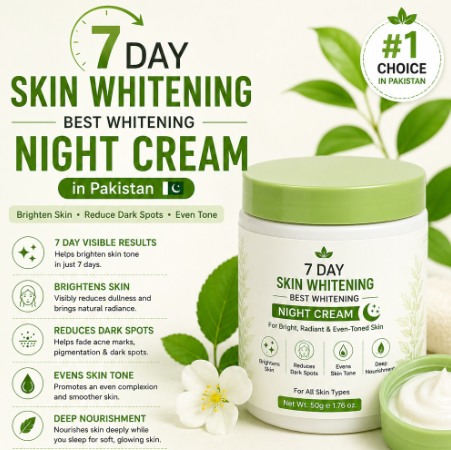
Can a Night Cream Brighten Skin in 7 Days?
Yes, a night cream can brighten the look of skin in 7 days, but the result is usually soft and natural. It may make the skin look fresh, smooth, and less dull. This happens because many night creams add moisture and support gentle skin renewal while you sleep.
A night cream cannot safely change your natural skin color in one week. It may help with dullness, mild tanning, or uneven tone, but dark spots and pigmentation need more time. The American Academy of Dermatology says sun protection is important when treating dark spots, because sun exposure can make them harder to fade.
Choose a cream with gentle brightening ingredients like niacinamide, licorice extract, vitamin C, or mild exfoliating acids. Avoid creams with hidden mercury, strong steroids, or unknown bleaching agents. The FDA warns that some skin lightening products may contain mercury or hydroquinone and may not be approved for safety or effectiveness.
What Results to Expect in the First Week
In the first 1 to 2 days, your skin may feel softer and more hydrated. Dry areas may look calmer, and the face may look less tired. This early glow often comes from better moisture, not deep whitening.
By days 3 to 5, dullness may look lower. The skin may feel smoother if the cream has mild exfoliating ingredients. Small uneven patches may also look a little softer.
By days 6 to 7, you may see a light glow and a more even look. Mild surface dullness can improve, but acne marks, tanning, melasma, or dark spots usually need several weeks. For best results, use the night cream as directed and apply sunscreen every morning.
Why Deep Pigmentation Takes More Time
Deep pigmentation takes more time because the dark color sits deeper in the skin. It is not just surface dullness. It may come from sun exposure, acne marks, melasma, or skin irritation. These marks fade slowly because the skin needs time to renew itself.
A night cream can help support this process, but it cannot remove deep pigmentation in only a few nights. Cleveland Clinic explains that hyperpigmentation happens when some areas of skin make more pigment than others. This is why dark patches can take weeks or months to look lighter.
Sun protection also matters. If you use a brightening night cream but skip sunscreen in the morning, dark spots can become worse again. AAD notes that melasma can cause darker patches on the face, and sun exposure can trigger or worsen it.
Why Night Cream Works Better for Skin Brightening
Night cream works well for skin brightening because it stays on the skin for many hours while you sleep. At night, the skin is not exposed to sunlight, dust, or outdoor heat. This gives the cream more time to moisturize the skin and support a smoother look.
Many brightening night creams contain ingredients that help reduce dullness and uneven tone. These may include niacinamide, licorice extract, vitamin C, or mild exfoliating acids. They can help the skin look fresher over time, especially when used regularly.
A night cream may also make the skin barrier feel stronger by adding moisture. When the skin is well hydrated, it often looks brighter and softer. For best results, use the night cream at night and apply sunscreen every morning.
Skin Repair During Sleep
Skin repair during sleep is one reason night cream can support a brighter look. While you rest, the skin works on recovery and renewal. This can help dry, tired, and dull skin look fresher by morning.
A night cream adds moisture and supports the skin barrier during this repair time. When the skin barrier is healthy, the face can look smoother and more even. This does not mean instant whitening, but it can help the skin look clean, soft, and glowing with regular use.
Less Sun Exposure at Night
Less sun exposure at night helps brightening products work better. During the day, sunlight can trigger more pigment in the skin, especially in dark spots and uneven patches. At night, the skin is away from direct UV rays.
This gives night cream more time to sit on the skin without sun exposure. It can help reduce dullness and support a more even look. Still, sunscreen is needed every morning because daytime sun can slow down brightening results.
Best Ingredients in Whitening Night Cream
The best ingredients in a whitening night cream are the ones that brighten the look of skin gently. Good options include niacinamide, licorice extract, vitamin C, azelaic acid, and mild exfoliating acids. These ingredients may help reduce dullness, uneven tone, and the look of dark spots over time.
A good night cream should also support the skin barrier. Ingredients like glycerin, ceramides, and hyaluronic acid help keep the skin soft and hydrated. When the skin is well moisturized, it often looks smoother and brighter.
Avoid creams with hidden mercury, strong steroids, or unknown bleaching agents. These can harm the skin. Choose products with a clear ingredient list and use sunscreen every morning for better results.
Niacinamide for Dark Spots
Niacinamide is a form of vitamin B3. It is often used in brightening creams because it can help improve uneven skin tone and reduce the look of dark spots. Cleveland Clinic says niacinamide is dermatologist-approved for brightening skin tone, and some research suggests 5% niacinamide may help lighten dark spots.
Niacinamide is also popular because it is usually gentle on the skin. It can support the skin barrier, improve moisture, and make the face look smoother. This makes it a useful choice for people with dullness, acne marks, or mild pigmentation.
Still, results take time. Niacinamide may start improving glow in the first week, but dark spots usually need several weeks of regular use. Use it at night with a gentle cream, and apply sunscreen in the morning.
Licorice Extract for Uneven Tone
Licorice extract is a gentle brightening ingredient often used in night creams. It may help improve the look of uneven tone, dark patches, and dull skin over time. It is also known for its soothing effect, which can help skin look calm and fresh.
Licorice root contains compounds that may help reduce excess pigment activity in the skin. A 2023 review notes that Glycyrrhiza glabra, known as licorice, has shown pigment-reducing effects in studies.
Still, licorice extract works slowly. It is better for gradual brightening, not instant whitening. Use it regularly at night, and apply sunscreen in the morning to help protect your results.
Retinol for Skin Renewal
Retinol is a form of vitamin A used in many night creams. It supports skin renewal by helping old, dull surface cells shed more easily. This can make the skin look smoother, fresher, and more even with steady use.
Retinol may also help with acne, rough texture, fine lines, and uneven tone. Cleveland Clinic explains that retinol is used in skin care for acne and anti-aging benefits.
Start slowly if you are new to retinol. Use it a few nights a week first, because it can cause dryness, peeling, or irritation. Avoid using too much, and wear sunscreen every morning because retinol can make skin more sensitive to the sun.
AHAs for Dead Skin Removal
AHAs are alpha hydroxy acids. They are used in many night creams to help remove dead skin cells from the surface of the skin. Common AHAs include glycolic acid and lactic acid.
When dead skin builds up, the face can look dull, rough, and uneven. AHAs help smooth the top layer of skin, so the face may look fresher and brighter over time. A 2024 dermatology review says AHAs are widely used in cosmetic products and chemical peels for skin care.
Use AHAs carefully. They can cause dryness, redness, or stinging, especially on sensitive skin. The FDA says AHAs can also increase skin sensitivity to UV rays, so sunscreen is important during the day.
How to Use Whitening Night Cream for 7 Days
Use whitening night cream at night after washing your face. Apply a small amount on clean, dry skin. Do not rub hard. Massage it gently until it absorbs.
For the first 7 days, keep the routine simple. Use cleanser, night cream, and morning sunscreen. Do not mix too many strong products, especially if the cream has AHAs, retinol, or other active ingredients.
In the morning, wash your face and apply sunscreen. This matters because sun exposure can make dark spots and uneven tone worse. Also, avoid unsafe whitening creams with hidden mercury, strong steroids, or unknown bleaching agents. The FDA warns that some skin lightening products may contain mercury or hydroquinone and may not be approved for safety or effectiveness.
Cleanse Your Face First
Cleanse your face first before applying whitening night cream. This removes dirt, oil, sweat, sunscreen, and makeup from the skin. When the face is clean, the cream can spread better and feel more comfortable.
Use a gentle face wash that suits your skin type. Do not scrub hard, because harsh rubbing can irritate the skin and make dark spots look worse. Pat your face dry with a clean towel before applying any serum or cream.
Apply Serum Before Night Cream
Apply serum before night cream if you use one in your routine. Serum is usually lighter than cream, so it should go on clean skin first. This helps it absorb better before the night cream seals in moisture.
Use only a few drops of serum. Let it sit for a short time, then apply your night cream gently. Do not mix too many strong products at once, especially if your serum has vitamin C, retinol, AHAs, or other active ingredients.
Massage the Cream Gently
Massage the cream gently after applying it to clean skin. Use your fingertips and move in soft upward motions. Do not pull, scrub, or rub the skin hard.
A gentle massage helps the cream spread evenly on the face and neck. It also helps the skin feel relaxed before sleep. Use only a small amount, because too much cream can feel heavy and greasy.
Use Sunscreen in the Morning
Use sunscreen in the morning after using whitening night cream at night. This step is very important because sunlight can make dark spots, tanning, and uneven tone look worse again.
Choose a broad-spectrum sunscreen and apply it before going outside. Reapply it if you sweat, wash your face, or stay outdoors for a long time. A night cream may support brightening, but sunscreen helps protect the progress.
Best Whitening Night Cream for Different Skin Types
The best whitening night cream depends on your skin type. A cream that works well for oily skin may feel too light for dry skin. A cream that feels rich on dry skin may feel heavy on oily skin.
Look for gentle brightening ingredients like niacinamide, licorice extract, vitamin C, or mild exfoliating acids. Also check for moisturizing ingredients, because healthy skin often looks brighter and smoother. Avoid creams with hidden mercury, strong steroids, or unknown bleaching agents.
For Oily Skin
For oily skin, choose a lightweight whitening night cream. Gel creams or oil-free lotions often feel better because they do not leave a greasy layer. The American Academy of Dermatology recommends oily skin products labeled “oil free” and “noncomedogenic,” because they are less likely to clog pores. (aad.org)
Niacinamide is a good option for oily skin because it can support a smoother and more even look. Avoid very thick creams, heavy oils, and strong fragrance, especially if your skin breaks out easily.
For Dry Skin
For dry skin, choose a richer whitening night cream with hydrating and barrier-supporting ingredients. Good options include glycerin, hyaluronic acid, ceramides, shea butter, and squalane. These can help reduce dryness and make the skin look soft and fresh.
Cleveland Clinic says good moisturizers for dry skin are often fragrance-free and may include humectants, occlusives, and emollients. These help pull in water, seal moisture, and smooth the skin.
Dry skin can look dull when it lacks moisture. A nourishing night cream can help the face look brighter by morning, but deeper dark spots still need regular use and daytime sunscreen.
For Sensitive Skin
For sensitive skin, choose a whitening night cream that is gentle, fragrance-free, and simple. Avoid strong perfume, harsh acids, and too many active ingredients in one product. These can cause redness, burning, or itching.
Look for calming and moisturizing ingredients like niacinamide, glycerin, ceramides, aloe vera, or panthenol. These can help support the skin barrier and reduce dryness. The American Academy of Dermatology says fragrance-free products are often better because added scents can trigger irritation or allergic reactions.
Patch test first before using the cream on your full face. Apply a small amount on one area and wait to see how your skin reacts. If your skin burns, peels badly, or becomes very red, stop using it.
Common Mistakes to Avoid
Common mistakes can slow down brightening results and irritate the skin. One big mistake is using too many products at the same time. For example, mixing retinol, AHAs, vitamin C, and strong whitening cream can be too harsh for many people.
Another mistake is skipping sunscreen in the morning. Night cream may help dullness and uneven tone, but sunlight can make dark spots worse again. The American Academy of Dermatology recommends sun protection for people of all skin tones.
Also avoid unknown whitening creams with no clear ingredient list. Some unsafe products may contain hidden bleaching agents, mercury, or strong steroids. Always choose a trusted product and follow the directions.
Using Too Much Cream
Using too much cream will not brighten skin faster. It can make the face greasy, heavy, and more likely to break out. It may also increase irritation, especially if the cream has active ingredients.
Use a small amount and spread it evenly over the face and neck. A thin layer is usually enough. The goal is regular use, not heavy use.
If your skin feels sticky or oily in the morning, you may be applying too much. Use less the next night and keep your routine simple.
Skipping Sunscreen
Skipping sunscreen is one of the biggest mistakes when using a whitening night cream. Night cream may help dullness and uneven tone, but sunlight can make dark spots, tanning, and pigmentation look worse again.
Use sunscreen every morning, even if you used the cream only at night. Choose a broad-spectrum sunscreen and apply it before going outside. This helps protect your skin and supports better brightening results.
Without sunscreen, your progress can slow down. The skin may look brighter at night, but sun exposure during the day can bring back dullness and uneven tone.
Expecting Instant Fairness
Expecting instant fairness can lead to disappointment. A night cream may make skin look fresh, soft, and glowing in the first week, but it cannot safely change your natural skin color overnight.
Real brightening takes time. Mild dullness may improve quickly, but deep pigmentation, acne marks, tanning, and melasma usually need weeks of regular care.
Avoid creams that promise instant fairness or very fast whitening. These claims can be risky, especially if the product has no clear ingredient list. Choose gentle brightening, steady use, and daily sunscreen for safer results.
FAQs About 7 Day Skin Whitening Night Cream
A 7 day skin whitening night cream is used to make the skin look brighter, smoother, and more even. It may help with dullness, mild tanning, and rough texture in the first week. But it cannot safely change your natural skin color in only 7 days.
For safe results, choose a cream with gentle ingredients and a clear label. Avoid products with hidden mercury, strong steroids, or unknown bleaching agents. The FDA warns that some skin lightening products may contain mercury or hydroquinone and may not be approved for safety or effectiveness.
Can I Use Whitening Night Cream Daily?
Yes, you can use whitening night cream daily if the product is made for daily use and your skin can tolerate it. Start with a small amount at night. If your skin feels calm, you can keep using it as directed.
If the cream has retinol, AHAs, or strong brightening ingredients, start slowly. Use it a few nights a week first. Stop using it if your skin burns, peels badly, or becomes very red.
Is Whitening Night Cream Safe for Sensitive Skin?
Whitening night cream can be safe for sensitive skin if it is gentle, fragrance-free, and free from harsh bleaching ingredients. Look for soothing ingredients like niacinamide, glycerin, ceramides, aloe vera, or panthenol.
Do a patch test before applying it to your full face. Sensitive skin can react quickly, so avoid using many active products at the same time. If irritation starts, stop the cream and use a simple moisturizer instead.
Can Men Use Whitening Night Cream?
Yes, men can use whitening night cream. Skin care depends on skin type, not gender. Men with dull skin, tanning, acne marks, or uneven tone can use a gentle brightening night cream at night.
Men with oily skin should choose a lightweight cream. Men with dry skin may need a richer cream. Sunscreen in the morning is still important, because sun exposure can make dark spots worse again. The AAD also says sunscreen helps when trying to fade dark spots.
How Long Does It Take to See Clear Results?
You may see a fresh glow in the first 7 days, especially if your skin was dry or dull. The skin may feel softer, smoother, and more hydrated.
Clear results usually take longer. Mild dullness may improve in 1 to 2 weeks, but tanning, acne marks, melasma, and deep pigmentation can take several weeks or months. Regular use and morning sunscreen give better results.
Final Thoughts on the Best Whitening Night Cream
The best whitening night cream is not the one that promises instant fairness. It is the one that brightens gently, supports the skin barrier, and helps the face look fresh over time.
Choose a cream that matches your skin type. Use it at night on clean skin, apply only a thin layer, and wear sunscreen every morning. This simple routine can help your skin look smoother, brighter, and more even without harsh steps.