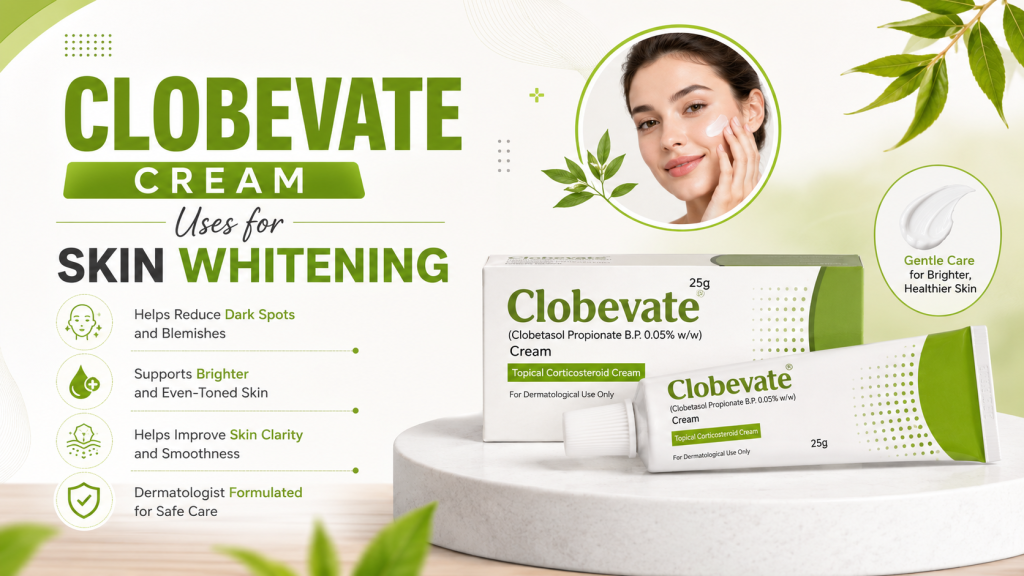
Clobevate cream should not be used for skin whitening. It is a strong steroid medicine, not a beauty cream or regular brightening product. Using it only to make the skin look fair can damage the skin and cause side effects.
Clobetasol, the medicine in Clobevate, is used to treat swelling, redness, and itching from certain skin problems. The NHS says clobetasol is a steroid medicine used for skin swelling and irritation. It should be used only when needed and as directed.
Using Clobevate wrongly can cause burning, stinging, dryness, acne, skin thinning, and other skin changes. Mayo Clinic also lists clobetasol as a topical medicine with possible side effects, including burning, itching, pain, and vision-related problems in some cases.
What Is Clobevate Cream?
Clobevate cream is a brand of clobetasol propionate. It is a very strong topical corticosteroid. Doctors may prescribe it for some inflammatory skin conditions, such as eczema, psoriasis, or severe skin irritation.
It works by reducing swelling, redness, and itching. It is not made to whiten skin, fade beauty marks, or give instant fairness. Cleveland Clinic describes clobetasol as a corticosteroid used on the skin to reduce inflammation and itching.
Clobevate should not be used on the face, underarms, private areas, or large skin areas unless a doctor tells you to. These areas absorb medicine more easily and may react faster. If you want brighter skin, choose safer options like sunscreen, niacinamide, vitamin C, or licorice extract instead.
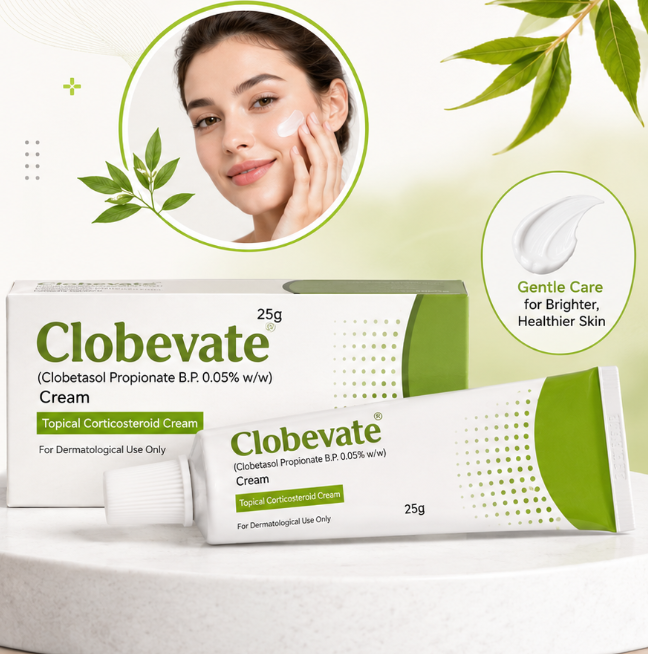
Is Clobevate Cream Used for Skin Whitening?
Clobevate cream should not be used for skin whitening. It contains clobetasol, which is a very strong topical steroid. It is made to reduce swelling, redness, itching, and irritation in certain skin conditions, not to make the skin fair. Cleveland Clinic says clobetasol is used for eczema and psoriasis and works by reducing swelling, redness, itching, and rashes.
Some people may notice a lighter look after using steroid creams, but this is not safe whitening. It can be a side effect of steroid misuse. Long-term or wrong use can cause skin thinning, stretch marks, acne, burning, dryness, and other skin problems. The NHS notes that clobetasol can make skin thinner and may cause stretch marks.
Do not use Clobevate on the face, underarms, groin, or large skin areas unless a doctor tells you to. Mayo Clinic also warns not to use clobetasol on the face, groin, underarms, or on skin thinning unless directed by a doctor.
Why People Use Clobevate for Fairness
People use Clobevate for fairness because they may see quick lightening, less redness, or a temporary smooth look. This can make it seem like the cream is working as a whitening product. But, oh no, that quick change can come with real risk.
Some people also use it because of advice from friends, beauty groups, or sellers who promote steroid creams as fast fairness solutions. This is unsafe. Clobevate is a medicine, so it should be used only for the skin problem it was prescribed for.
For safer brightening, choose non-steroid options like sunscreen, niacinamide, vitamin C, licorice extract, or azelaic acid. These work more slowly, but they are better for regular skin care. If you have dark patches, acne marks, or melasma, a dermatologist can guide you toward a safer treatment.
Is Clobevate Safe for Face Whitening?
No, Clobevate is not safe for face whitening. It contains clobetasol, which is a very strong steroid medicine. It is not made to lighten the face or improve beauty. It should only be used for medical skin problems when a doctor advises it.
Using Clobevate on the face for whitening can cause harm. The face has thinner skin, so it can react faster. Wrong use may lead to burning, acne, redness, skin thinning, stretch marks, and more sensitivity. Mayo Clinic says clobetasol should not be used on the face, groin, or underarms unless directed by a doctor.
If you want a brighter face, choose safer options like sunscreen, niacinamide, vitamin C, licorice extract, or azelaic acid. These work slowly, but they are safer for regular skin care.
Main Uses of Clobevate Cream
Clobevate cream is mainly used to reduce skin swelling, redness, itching, and irritation. The NHS says clobetasol is a very strong steroid that reduces inflammation, itching, and pain caused by allergic reactions or irritation.
Doctors may prescribe it for certain skin conditions like eczema, psoriasis, lichen planus, or severe dermatitis. It helps calm inflamed skin, but it does not treat normal dullness, tanning, or uneven tone.
Clobevate should be used only on the affected area and only for the time advised by a doctor. Do not use it on healthy skin or large areas without medical advice. Cleveland Clinic also says clobetasol should not be used on healthy skin or over large areas of skin.
For Skin Redness
Clobevate cream may be used for skin redness when the redness is linked to an inflammatory skin condition. It can help calm the skin by reducing inflammation.
It should not be used for normal facial redness, sunburn, acne redness, or beauty purposes unless a doctor advises it. Wrong use can make the skin thin, sensitive, or irritated.
For Itching
Clobevate cream may help itching caused by certain skin conditions. It works by calming inflammation in the skin, which can reduce the itchy feeling.
Do not use it for mild itching without medical advice. It is a strong steroid, so it should be used only on the affected area and only for the advised time.
For Swelling
Clobevate cream may help reduce swelling caused by skin inflammation. It can be useful when the skin is swollen, red, and irritated due to a condition that needs steroid treatment.
It should not be applied to large areas or used for a long time without a doctor. Overuse can cause side effects and skin damage.
For Eczema
Clobevate cream may be prescribed for severe eczema when milder creams do not work. It can help reduce redness, itching, swelling, and irritation during a flare-up.
It is not usually used as a daily long-term cream. A doctor may recommend it for a short time, along with a gentle moisturizer to support the skin barrier.
For Psoriasis
Clobevate cream may be used for psoriasis patches to reduce scaling, redness, itching, and swelling. It can help calm thick and inflamed skin.
It should be used only as directed by a doctor. Psoriasis often needs a full care plan, so Clobevate should not be used as a regular fairness or whitening cream.
Side Effects of Clobevate Cream
Clobevate cream can cause side effects, especially if it is used too often, used for too long, or applied on the face without medical advice. It contains clobetasol, which is a very strong steroid.
Common side effects may include burning, stinging, itching, dryness, redness, acne, and skin irritation. More serious side effects can happen with long-term misuse. These may include skin thinning, stretch marks, visible veins, and changes in skin color.
Clobevate should be used only as directed by a doctor. Do not use it for skin whitening, fairness, acne marks, or normal dullness.
Skin Thinning
Skin thinning is one of the known risks of using strong steroid creams like Clobevate. The skin may become weak, soft, shiny, or more sensitive. Small cuts or irritation may also happen more easily.
This risk is higher when Clobevate is used on the face, underarms, groin, or large skin areas. These areas can absorb more medicine and react faster.
To reduce risk, use Clobevate only on the affected area and only for the time advised by a doctor. Stop using it and seek medical help if your skin becomes very thin, painful, swollen, or badly irritated.
Acne Breakouts
Acne breakouts can happen when Clobevate cream is used wrongly, especially on the face. Strong steroid creams can disturb the skin and may trigger small pimples, clogged pores, or acne-like bumps.
This risk is higher if the cream is used for skin whitening or applied for many days without medical advice. Do not use Clobevate on acne, oily skin, or normal dullness unless a doctor tells you to.
Burning Feeling
A burning feeling may happen after applying Clobevate cream. Some people may feel stinging, warmth, or irritation on the treated area.
Mild burning can happen at the start, but strong burning is not normal. If the skin burns badly, turns very red, swells, or peels, stop using the cream and get medical advice.
Visible Veins
Visible veins may appear when strong steroid creams are used for too long. The skin can become thin, weak, and more transparent. This can make small blood vessels easier to see.
This is more likely on the face, underarms, and other thin skin areas. To lower the risk, use Clobevate only on the affected area and only for the time advised by a doctor.
Dark or Light Patches
Dark or light patches can happen after wrong use of Clobevate cream. The skin may become uneven in color, especially if the cream irritates the skin or is used for whitening.
Some areas may look lighter, while others may become darker after irritation. This can make the skin tone look patchy instead of clear. Avoid using Clobevate as a fairness cream, and use safer brightening options only when needed.
Risks of Using Clobevate for Whitening
Using Clobevate for whitening is risky because it is a strong steroid medicine, not a fairness cream. It may give a quick lighter look for some people, but this is not safe skin brightening.
Wrong use can damage the skin and cause side effects. These may include acne, burning, redness, skin thinning, visible veins, and uneven dark or light patches.
Clobevate should only be used for medical skin problems when a doctor advises it. It should not be used on the face, healthy skin, or large areas for whitening.
Steroid Damage
Steroid damage can happen when Clobevate is used too often or for too long. The skin may become thin, weak, shiny, or sensitive. It may also bruise or irritate more easily.
This damage is more likely on the face, underarms, and groin because these areas have thinner skin. Using Clobevate for fairness can make the skin worse instead of better.
Skin Sensitivity
Skin sensitivity may increase after wrong use of Clobevate. The skin may start to burn, sting, itch, or turn red when using normal skin care products.
Sensitive skin can also react more strongly to sunlight, heat, sweat, and fragrance. This can make daily skin care harder and more uncomfortable.
Pigmentation Return
Pigmentation can return after stopping Clobevate. The skin may look lighter for a short time, but dark patches can come back if the real cause is not treated.
Sun exposure, acne marks, melasma, and irritation can all bring pigmentation back. In some cases, steroid misuse can make the skin tone look more uneven than before.
Long-Term Skin Weakness
Long-term skin weakness can happen when strong steroid creams are misused. The skin barrier may become weak, dry, and easily irritated.
Weak skin may take longer to heal from acne, cuts, sun exposure, or rashes. This is why Clobevate should never be used as a regular whitening cream. Safer brightening options are better for long-term skin care.
Long-Term Skin Weakness
Long-term skin weakness can happen when Clobevate is used for whitening or used longer than advised. Clobevate contains clobetasol, a very strong steroid. It is made for short-term treatment of certain inflamed skin conditions, not for daily beauty use.
With wrong use, the skin may become thin, weak, shiny, sensitive, and slow to heal. Small veins may become more visible, and the skin may react faster to sunlight, heat, sweat, and normal skin care products. The NHS also warns that long-term use of clobetasol can lead to skin reactions after stopping treatment.
Can Clobevate Remove Dark Spots?
Clobevate is not a proper treatment for dark spots. It may reduce redness or swelling if there is inflammation, but it does not safely treat pigmentation, tanning, melasma, or sun spots.
Using it for dark spots can make the skin worse. It may cause dark or light patches, acne, skin thinning, and sensitivity. For dark spots, safer options include sunscreen, niacinamide, vitamin C, azelaic acid, and licorice extract.
Can Clobevate Remove Acne Marks?
Clobevate should not be used to remove acne marks. Acne marks need gentle brightening care and sun protection. A strong steroid can trigger acne-like bumps or make breakouts worse.
If acne marks are red, brown, or deep, they may need different care. A dermatologist may suggest safer products based on your skin type. Do not apply Clobevate on acne or acne marks unless a doctor clearly tells you to.
Can Clobevate Be Used on the Face?
Clobevate should not be used on the face unless a doctor says it is needed. Facial skin is thin and absorbs strong steroid creams more easily. This raises the risk of side effects.
Mayo Clinic says clobetasol should not be used on the face, groin, or underarms unless directed by a doctor. The NHS also says clobetasol can make some face problems worse, such as acne and rosacea.
How Long Should Clobevate Be Used?
Clobevate should be used only for the time advised by a doctor. It is not a cream for long-term daily use. The NHS says not to use clobetasol for more than 4 weeks without talking to a doctor.
Use a thin layer only on the affected area. Do not use it on healthy skin, large areas, or under tight covering unless your doctor advises it. Longer use can raise the risk of skin thinning and other side effects.
Who Should Avoid Clobevate Cream?
People should avoid Clobevate if they want it only for whitening, fairness, acne marks, tanning, or normal dullness. It is not made for these uses.
People with acne, rosacea, skin infections, broken skin, or very sensitive facial skin should also avoid it unless a doctor gives clear advice. Children, pregnant women, and people using it on large areas should be extra careful and follow medical guidance only.
Clobevate Cream and Skin Bleaching
Clobevate is sometimes misused as a skin bleaching cream because it may give a temporary lighter look. But this is unsafe. It is a steroid medicine, not a safe bleaching or whitening product.
Steroid misuse can lead to skin thinning, visible veins, acne, irritation, and uneven skin color. It may also cause pigmentation to return after stopping. For brightening, it is better to use safer non-steroid ingredients and sunscreen.
Clobevate Cream Vs Whitening Cream
Clobevate cream and whitening cream are not the same. Clobevate is a strong medicine used to reduce inflammation, itching, redness, and swelling from certain skin conditions. Mayo Clinic says clobetasol helps relieve redness, itching, swelling, and discomfort caused by some skin conditions.
A whitening or brightening cream is usually made for dullness, uneven tone, and dark spots. It may contain ingredients like niacinamide, vitamin C, licorice extract, or azelaic acid. These work more slowly, but they are more suitable for regular skin care when used correctly.
Safer Alternatives for Skin Brightening
Safer alternatives for skin brightening include sunscreen, niacinamide, vitamin C, licorice extract, azelaic acid, mild AHAs, and gentle moisturizers. These options support a clearer look without using strong steroids.
Sunscreen is the most important step because sunlight can make dark spots and pigmentation worse. Brightening products work better when the skin is protected every morning.
Niacinamide Cream
Niacinamide cream is a safer option for dullness, uneven tone, and mild dark spots. It can help support the skin barrier and make the face look smoother and calmer.
Niacinamide does not bleach the skin. It works slowly with regular use. Apply it as directed, keep the skin moisturized, and use sunscreen every morning for better results.
How to Brighten Skin Safely
You can brighten skin safely by protecting it, keeping it calm, and using gentle products. The goal should be an even and healthy look, not instant fairness.
Safe brightening takes time. Dark spots, tanning, and acne marks usually fade slowly. A simple routine with sunscreen, moisturizer, and mild brightening ingredients works better than harsh creams.
Avoid quick whitening tricks that burn, peel, or weaken the skin. Healthy skin should feel soft, comfortable, and balanced.
Use Sunscreen Daily
Use sunscreen every morning to help control pigmentation. Sunlight can make dark spots, tanning, melasma, and acne marks look darker again.
Choose a broad-spectrum sunscreen with SPF 30 or higher. Apply it as the last step of your morning routine. Reapply it if you sweat, wash your face, or stay outside for a long time.
Sunscreen also helps brightening products work better. Without it, your skin may become dull again even if you use creams at night.
Avoid Harsh Steroid Creams
Avoid harsh steroid creams for whitening. Strong steroid creams like Clobevate are medicines, not beauty creams. They should only be used for medical skin problems when a doctor advises it.
Using steroid creams for fairness can damage the skin. It may cause acne, burning, redness, skin thinning, visible veins, and dark or light patches.
Do not use steroid creams on the face for brightening. Safer options are better for long-term skin care.
Choose Gentle Brightening Products
Choose gentle brightening products with clear ingredients. Good options include niacinamide, vitamin C, licorice extract, azelaic acid, mild AHAs, and hydrating ingredients.
These ingredients can help dullness and uneven tone slowly. They do not bleach the skin, but they can support a fresher and more even look.
Avoid products that promise instant fairness or very fast whitening. Strong claims often come with higher risk.
Follow a Simple Routine
Follow a simple routine so your skin does not get irritated. In the morning, cleanse your face, apply moisturizer if needed, and use sunscreen.
At night, cleanse your face and apply a gentle brightening cream or serum. Use only one or two active products at a time.
Do not mix too many strong ingredients together. If your skin burns, peels badly, or turns very red, stop the product and switch to a gentle moisturizer.
FAQs About Clobevate Cream
Clobevate cream is a strong steroid medicine. It is used for certain skin problems like redness, itching, swelling, eczema, and psoriasis when a doctor advises it. It is not a normal whitening cream.
Using Clobevate for skin whitening can harm the skin. It may cause acne, burning, skin thinning, visible veins, and uneven dark or light patches. It should not be used on the face or healthy skin unless a doctor clearly says so.
Does Clobevate Whiten Skin Permanently?
No, Clobevate does not whiten skin permanently. It may give a temporary lighter look in some people, but this is not safe or healthy whitening.
Once you stop using it, the skin may return to its normal tone. In some cases, pigmentation may come back darker because of irritation, sun exposure, or steroid misuse.
Can I Use Clobevate Every Night?
No, you should not use Clobevate every night for whitening or fairness. It is a strong steroid and should only be used for the time advised by a doctor.
Using it every night without medical advice can weaken the skin. It may cause skin thinning, acne, redness, burning, and visible veins, especially on the face.
Is Clobevate Good for Pigmentation?
No, Clobevate is not a good treatment for pigmentation. It does not safely treat tanning, melasma, sun spots, acne marks, or uneven skin tone.
For pigmentation, safer options include sunscreen, niacinamide, vitamin C, azelaic acid, licorice extract, and gentle moisturizers. These work slowly, but they are better for regular skin care.
Can Clobevate Damage the Face?
Yes, Clobevate can damage the face if used wrongly. Facial skin is thin and sensitive, so strong steroid creams can cause side effects faster.
Possible problems include acne breakouts, burning, redness, skin thinning, visible veins, stretch marks, and patchy skin color. Do not use Clobevate on the face unless a doctor tells you to.
What Happens If I Stop Using Clobevate?
If Clobevate was used correctly for a short time, the skin problem may improve after stopping. But if it was used for whitening or used too long, stopping may cause problems.
The skin may become red, itchy, dry, or sensitive. Pigmentation may also return. If you used Clobevate for a long time, do not restart it for whitening. Speak with a dermatologist for safer care.
Final Thoughts on Clobevate Cream for Skin Whitening
Clobevate cream should not be used for skin whitening. It is a strong steroid medicine made for certain skin conditions, not for fairness, glow, or dark spots.
Using it for whitening can damage the skin and cause long-term problems. A safer brightening routine includes sunscreen, gentle moisturizer, niacinamide, vitamin C, licorice extract, or azelaic acid.
Healthy skin is better than quick fairness. Choose slow, safe brightening instead of steroid creams that can harm your face.